
A Ministry of Pages and Presence
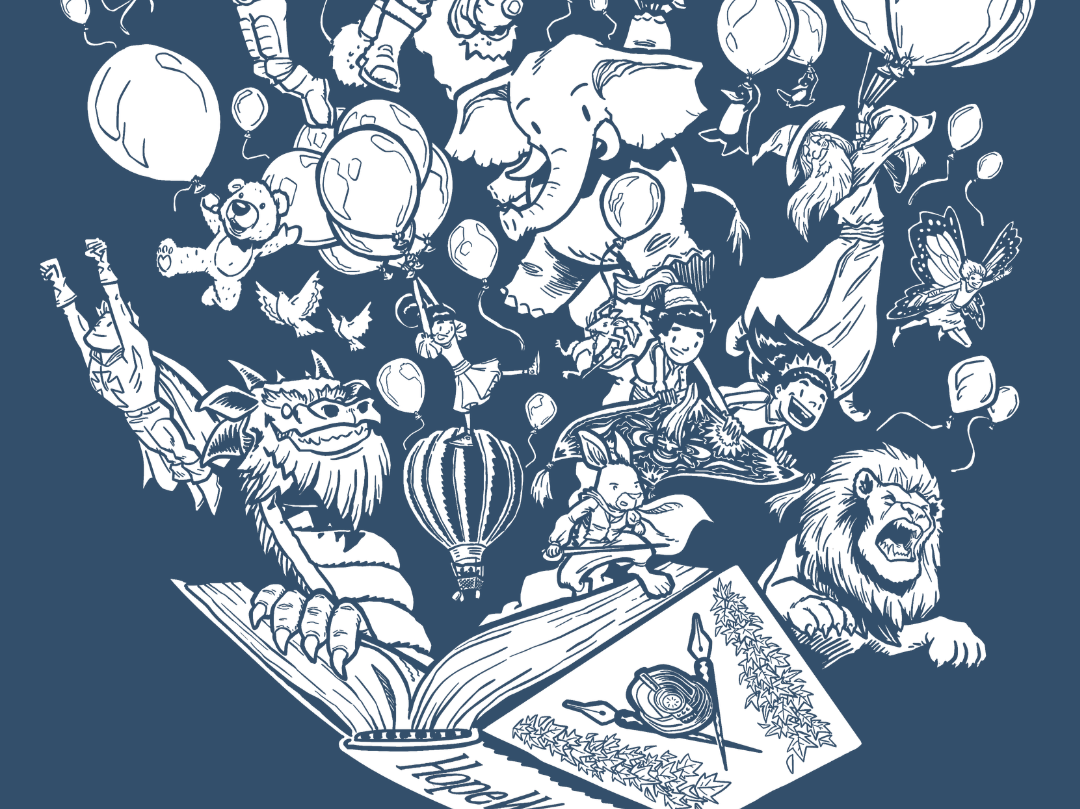
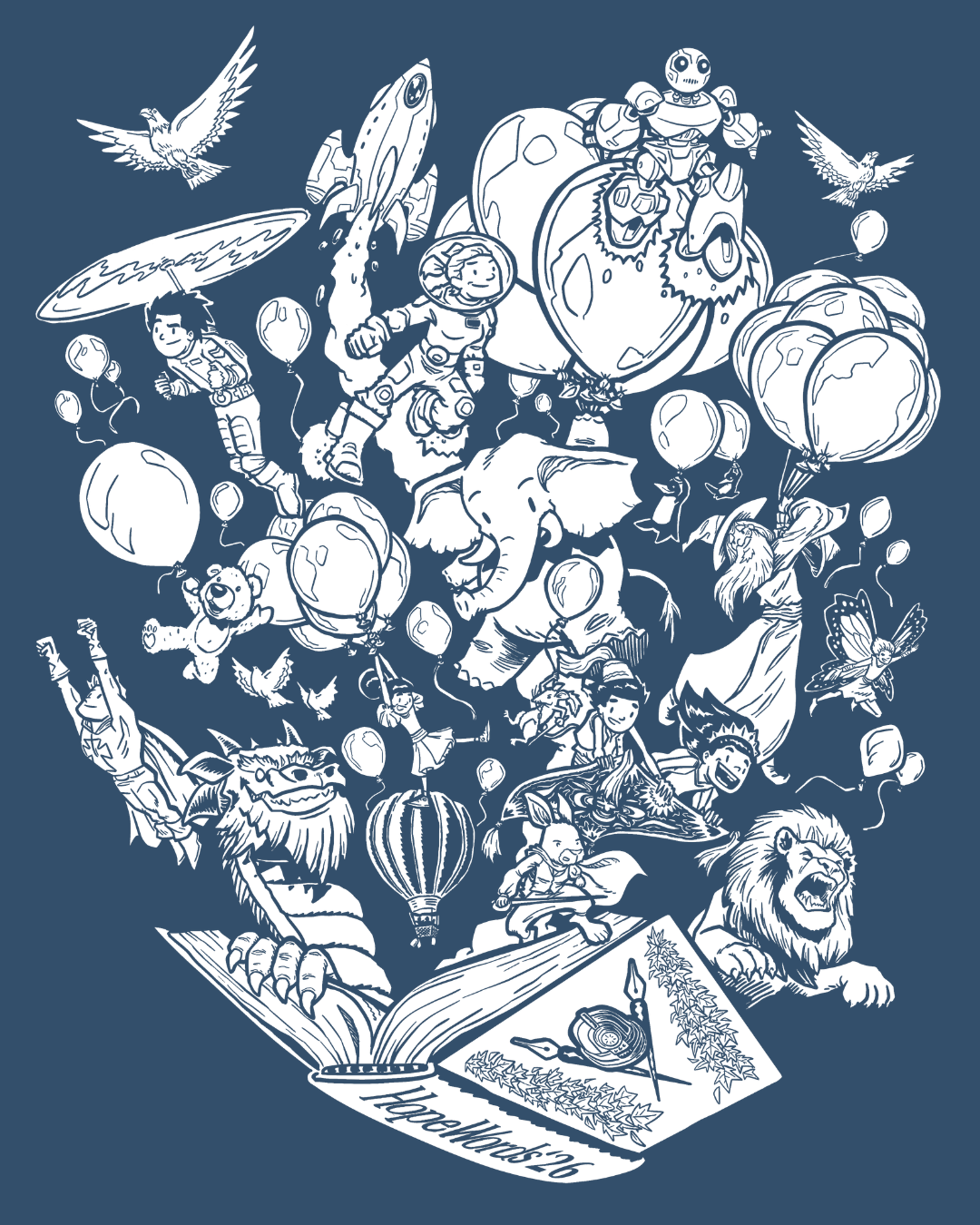
“Stories” - Jerry Bennet
My co-worker Michelle would sometimes pop around the corner and ask me about children’s books when we had a slower day at the library. Listening to her revisit stories from her childhood was relatable and hilarious because she was always cheering for the offbeat authors and misunderstood children in any story. With having a sister often misunderstood because of her disabilities, I knew how we needed advocates like Michelle for fictional and non-fictional characters in our libraries. One day she asked if I had read Harriet the Spy because she was considering it for her elementary school book club.
“All the reviews I read on that book, even academic ones, said that the author wrote Harriet to be an ‘unlikable character’. As if the reader should know that Harriet is not someone to root for. I could not find a single one who championed Harriet. As a child, I remember identifying with her so much because she was always just saying what was on her mind. She was a very likable character to me!”
Having never read the book, that single conversation inspired me to read it for myself; I wanted to see what she saw. Michelle knew that children’s literature possessed world-changing powers and that a library full of stories meant the curiosity never had to end. What I, and so many others in our library, wouldn’t give to keep having those holy book chats about loving the outcasts and the strangers with her on a random Thursday afternoon.
----
My husband and I discovered the library when our oldest child was 18 months old, noting that it was a 15-minute stroller walk away. Having a library card taught us how to be better pedestrians in our own city—even before they finally installed sidewalks. We came for the programming and children’s books. I loved how personable the staff were to my daughters. How cozy and low-tech it was in an almost unaware way, the only screens were the old dusty desktops scattered around. We also loved visiting the aging wooden playground next door, Pioneer Frontier, whose towering turrets, corridors, and climbing walls were built from scratch in 1994 by the hands of this community we were warming up to.
Sitcoms like The Andy Griffith Show and Parks and Rec have become comedy standards because they acknowledge a singular truth: small towns are full of interesting characters. The people who have authority there make equally interesting decisions. We have come a long way in terms of leadership according to the interesting 102 page town history on public record, but getting approval for change is an interesting process. Even with healthy changes in the works, our city sometimes still acts against its own best interests. Little towns learn to take the good with the bad, the frustrating with the heartwarming. My place in East Tennessee is no different. I have watched this small town dynamic play out as a resident for 18 years, but it’s different now that I work as an employee of the city at its library, instead of only patronizing it. To me our government-funded building of books in the town center is both hope and home.
When I was hired several years ago, I often wondered what the future of libraries would look like in the age of Google and the rise of AI. How do changes in how people think about language and writing and ideas trickle down to smaller libraries like us who have parts that seem untouched since the 1990’s? Why does a building full of physical books mean anything anymore when we’re in the golden age of technological gluttony for both entertainment and information?
So I took time to observe and experience the hum of our library. We were still functioning in the same ways we always had been: a safe third space for people to hang out, unstructured play with toddler toys, printing off job applications, hearing book recommendations, having a Last Will and Testament signed and notarized. Our small library’s circulation and programming numbers were promising. All signs pointed to our small local library as vital. If we were ever on the city’s budgetary chopping block, we could present this to city leadership and our library board; on paper we could always justify our existence to the community.
Then one Friday evening at the beginning of February 2026, something happened far beyond what the data could show: our co-worker Michelle, age 39, died suddenly of a severe asthma attack at her home. She had been with the library for only a year and half, but to us it seemed like she had always been a part of the team. Our ray of sunshine and whimsy left our midst.
The first time I had a deep conversation with Michelle I was scraping off decorative window paint outside the library shortly after she joined the staff. I learned she had experienced significant suffering as a mother. Her eldest son had died several years ago in a car accident and she wasn’t afraid to talk about his life and memory. Her second creative son had been a sense of support as they all, including her devastated husband, had to face emotional hardship in the wake of the loss. Her third son, with the most beautiful dark curly hair, used a wheelchair and her love for him sparked a passion for serving neurodivergent learners. Her fourth son and my fourth daughter share the exact same name and age. So while we discovered our common loves and passions that day, I learned there was sorrow behind her contagious smile that fueled her resolve to remake the world out of kindness. Working with Michelle was like being around magic and enthusiasm, you’d swear she was hiding glitter in her pocket ready to throw on the perfect occasion. Always aware of the mood in a room, she never failed to facilitate joy, playfulness, and compassion as an atmosphere that followed her around our sometimes musty building, a balmy microclimate in our little sacred space.
When Michelle, a literature major with an education background, first came in, she bubbled over about reading books while she waited for patrons to ask for assistance. Her 21-hour-a-week part-time job, however, was becoming understimulating for her skill set. She turned her time and energy into planning for programming as a quiet disruptor. Constantly but subtly asking for permission from the programs director, she started things we had never tried at the library before—Family Game Night or the weekly Baby Bounce class that was overflowing with liturgical sing-song greetings and goodbyes, drool and diapers within a month of it starting. People adored her because she made them feel safe and seen with her come-as-you-are welcomes every day. Her outreaches were almost all successes, forming a small consistent community of grandparents and parents who trusted us as a staff. With $1000 on the line, she had recently helped me co-write a grant in two weeks’ time. A teaching garden for our community was the goal, visions of vegetables on our minds. We did get chosen for the grant, but now instead of her helping teach the children about gardening with me, we named the gardens in her honor.
As a lifelong learner and college-educated woman, Michelle showed a level of dedication to her library position that paid her no more per hour than an entry level job at many fast-food restaurants. For employment that, on paper, required nothing more than an ID, high school diploma, customer service skills, and to be able to lift 25 pounds, Michelle reaped tenfold what she put into it. Whether in her writings, her friendships, her teaching, or her status as a librarian, she gave vulnerability, understanding, and kindness. We were so excited for her when she told us she was going to school online to get a master’s in Library Science, something she had wanted to do since she was 8 years old. There was a new chapter filled with calling for her life and we celebrated together, dreaming about all the possibilities for the library's future—always doing a lot with a little, but maybe including a well-deserved pay raise.
After her death, we may have gone back to work, but all our rituals felt broken down as we continued to serve. Time simultaneously stopped and threw us back into the past remembering other young library patrons that had unexpectedly passed away and how their families took years to return to us, a place their child had loved so much. Some, understandably, never came back. My own daughters, who saw Michelle as an attentive, fun mom at the library multiple days of the week, struggled. As a staff, we knew there would be a floodtide of responses once we could share the unthinkable news; patrons came in crying or immediately asking us how they could help her family. We gave the link to the meal train and bought more blank cards from the Dollar Tree because we had so many that wanted to write words of comfort and condolence to her loved ones. We gave our patrons deep hugs and crisp tissues, explained the events of her passing over and over again, ordered new books on grief, and just sat in silence for a while. Patrons brought food in for the staff so we didn’t have to think about making lunch for ourselves a few days out of the week. They gave and we gave. We gave and they gave. Together, our consecrated community held the weight of this significant grief, love, and loss.
It’s easy to look around with lament at a culture where employees can be expendable and monetized, a job market that encourages superficial connections untethered to a community. But libraries have always been different because their goal is to serve those right in front of them; there is a common grace in their everyday presence as public servants, especially to those whose dignity has been compromised, who are shunned or overlooked in other communities. Our free programs, book offerings, and patrons help us feed the hungry, give drink to the thirsty, clothe those without, shelter the homeless, welcome those who were in prison, comfort the sick, and, yes, sometimes even bury the dead. The paycheck won’t ever be commensurate with the weighty work, but the outpouring of love for Michelle reminded me of Mary Oliver’s question to us of what we were going to do with our “one wild and precious life.” Michelle showed us all what she wanted to do with hers, forecasting a brighter future while carrying those last bits of hope from her books, family, and friends in her flowy skirt pockets every day. Michelle’s spirit of benevolence continues to encourage us, in our own little city, in our own little library, to do the same.
Rachel Lonas
Bio -Lorem ipsum dolor sit amet consectetur adipiscing elit. Quisque faucibus ex sapien vitae pellentesque sem placerat. In id cursus mi pretium tellus duis convallis. Tempus leo eu aenean sed diam urna tempor. Pulvinar vivamus fringilla lacus nec metus bibendum egestas. Iaculis massa nisl malesuada lacinia integer nunc posuere. Ut hendrerit semper vel class aptent taciti sociosqu. Ad litora torquent per conubia nostra inceptos himenaeos.
Jerry Bennet
Jerry Bennett is a freelance illustrator and graphic novelist focused on writing & illustrating his own graphic novels. Jerry has held art residencies across Oklahoma and teaches the process of creating graphic novels in schools and libraries. Jerry is the SCBWI Global U.S. Illustrator Coordinator and an establishing board member of the Oklahoma Comic Arts Foundation.
